And So It Begins

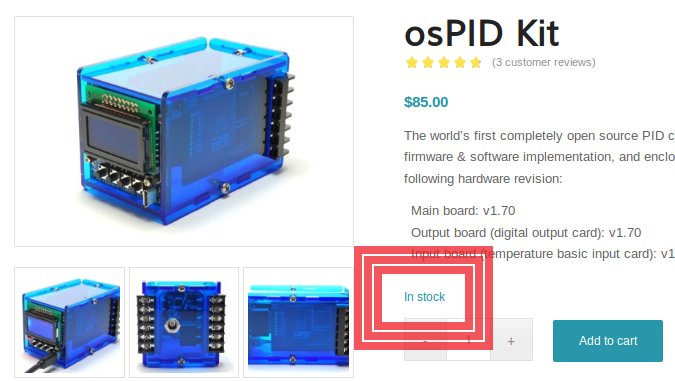
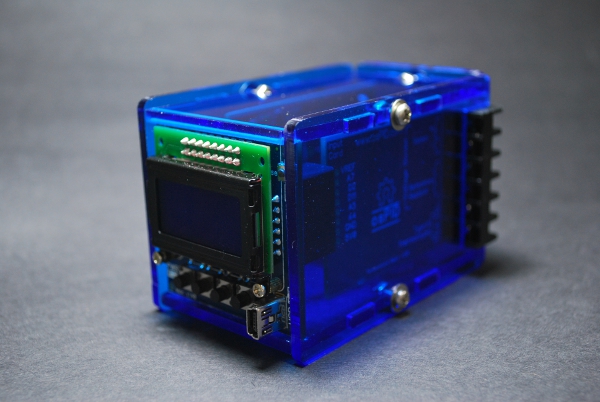
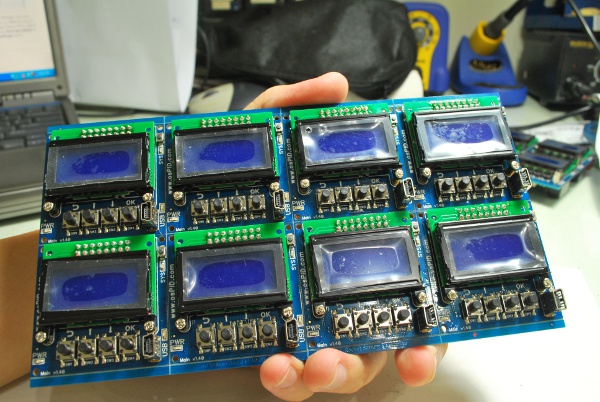
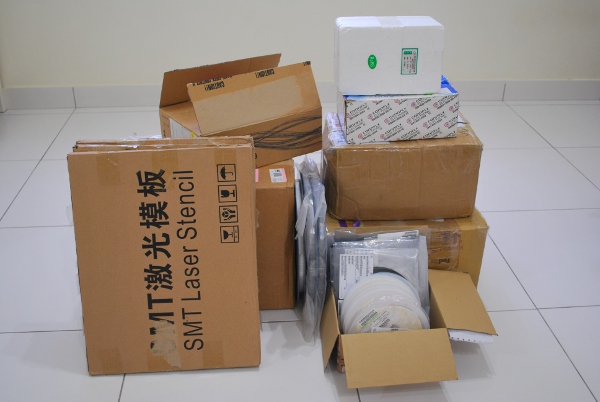
Just a quick post to let everyone know that shipping has started. The first units went out today! all boards are re-flowed/assembled, Just need to test, pack, and ship. Here are some pics to tide you over until your osPID arrives:


Production Update

Things are finally rolling at osPID HQ. All of our parts are either on site or in transit, and production will being as soon as everything arrives.

That’s the good news. The less-good news is that we’ve had to push back our planned ship date. Originally we were planning on shipping this week. Unfortunately we’ve had to push that back to the week of 2/19.

The Story

With every delay it’s good to have a scapegoat, and we’ve got one! Maxim Electronics. On the prototype temperature card, we used their MAX6675 thermocouple chip. For the production model, we decided to use their newer (and less expensive) MAX31855 chip.

When we went to order the MAX31855 however, instead of the initially advertised January delivery date, the date had been revised to July. JULY! We checked various suppliers, but this seems to be an issue with Maxim itself.

So, faced with a choice between a 6 month delay and a more expensive chip, we decided to eat the cost and revert the board back to the MAX6675 configuration we had used in the prototype.

During this whole debacle we lost our place in line with the PCB manufacturer and had to re-submit our order. Unfortunately this put us on the other side of Chinese New Year.

And that brings us to today. We want to apologize for both the delay and the chip swap. If you had your heart set on the MAX31855, know that from a financial perspective so did we. We have a board designed and ready for that chip. Once supplies of the are more reliable we will transition to it.

A Note About Cost

Wow. What an amazing first week-or-so. Hackaday, Adafruit, BoingBoing, and Make. It’s almost too much to ask! Thanks to everyone for the positive feedback.

In the midst of this there is one recurring concern that I wanted to address. Many people seem to be comparing this thing to the $30 PID controllers you can get on ebay. I want to take this opportunity to highlight some of the features that set the osPID apart from the low-end competition.

More Sensor Interfaces
By default, the osPID can read either a K-Type thermocouple or a Thermistor. With more input cards on the way (RTD, Voltage, etc..) this allows you to use the osPID in more situations.

Desktop Configuration / Graphing Application

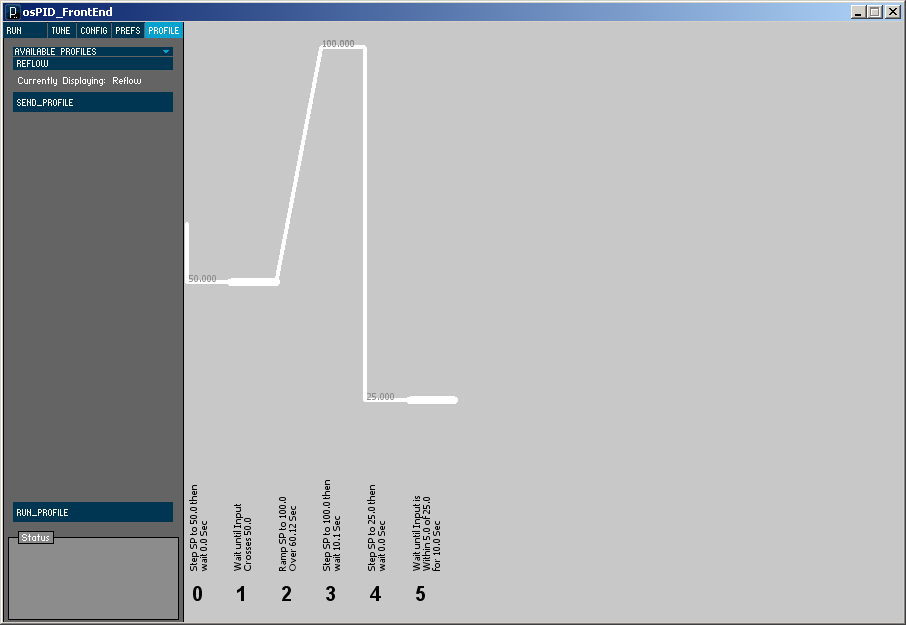
When configuring and monitoring a PID controller, having a graph in front of you is indispensable. The osPID comes with a free (and Open) java application that allows you to interact with the controller from the desktop. You’ll be hard-pressed to find this with any PID controller, and if you do it’ll cost you.

Autotuning
Settling on the correct P, I, and D parameters can be time consuming. Most expensive PID controllers provide an “autotune” which automatically determines good values. The osPID has this. Many cheap controllers do not.

Open Hardware / Software
If your $30 PID controller breaks, or it doesn’t do something you’d like it to, you’re stuck. The osPID is completely open. All software, hardware plans, and firmware code is freely available to download and modify. If you want it do something different, go for it! If a bug is discovered, it can be fixed and downloaded by everyone.

Support
Initially from me, but ultimately (hopefully) from a community of people that have been there, with this specific controller.

So yes. It costs $85
What we have here isn’t an open knock-off of a $30 PID controller. The osPID has, in many cases, better functionality than even a $200 PID controller. Combine this with an unprecedented level of hackability and community, and I’d say that makes this a pretty good buy. (OF COURSE I would say that, but hopefully you agree.)

Initial Release is Finally Here!

The website is still a little rough around the edges, but the product is ready for initial release, so here goes!  Let me introduce you to the osPID:

We’ve been working hard over the last several months to build a fully-featured, open source PID controller that’s every bit as capable as its closed brethren.

There’s a bunch of information on this site regarding technical details, purchasing information, and even a quick PID primer.  Take a look around, and let us know what you think!

(If you’re so inclined, there’s also a post on my personal blog with some introductory videos)